-
-
-
-
- WHX Labs Dubai 2026
- analytica 2026
- Forum Labo 2026
- SLAS Europe 2026
- Forum Labo 2026 Bioprocess
- Bioprocessing Summit Europe 2026
- BioProcess International 2026
- Swiss Biotech Day 2025
- ISCT 2026
- Pichia 2026
- Future Labs Live 2026
- BioProScale Sympposium 2026
- ASGCT 2026
- Eppendorf Automation Forum 2026
- ESACT 2026
- ECB 2026
- WoTS 2026
- SIMB Annual Meeting 2026
- ELRIG Drug Discovery 2026

-
-
-
-
- WHX Labs Dubai 2026
- analytica 2026
- Forum Labo 2026
- SLAS Europe 2026
- Forum Labo 2026 Bioprocess
- Bioprocessing Summit Europe 2026
- BioProcess International 2026
- Swiss Biotech Day 2025
- ISCT 2026
- Pichia 2026
- Future Labs Live 2026
- BioProScale Sympposium 2026
- ASGCT 2026
- Eppendorf Automation Forum 2026
- ESACT 2026
- ECB 2026
- WoTS 2026
- SIMB Annual Meeting 2026
- ELRIG Drug Discovery 2026
-
- Wszystkie pipety, dozowniki oraz automatyczne urządzenia do pracy z cieczami
- Pipety mechaniczne
- Pipety elektroniczne
- Pipety wielokanałowe
- Pipety z wyporem bezpośrednim i dozowniki
- Dozowniki butelkowe
- Pipetory
- Dozowniki i akcesoria do pipet
- Pipetowanie automatyczne
- Materiały eksploatacyjne do urządzeń automatycznych
- Akcesoria do urządzeń automatycznych
- Systemy do pracy z cieczami i serwisowanie pipet

Braking Ramps
Akademia laboratoryjna
- Wirowanie
- Eksperyment
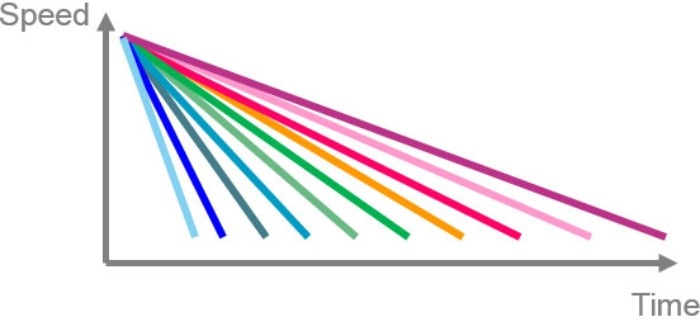
Most of the larger benchtop centrifuges on the market as well as some small benchtop centrifuges offer what are called acceleration and deceleration (braking) ramps. Most small benchtop centrifuges also enable the user to switch between a normal brake and a soft/slow brake.
Warto przeczytać
To prevent remixing the phases, the protocol requires that acceleration/deceleration be shut off completely so that the centrifuge accelerates slowly and high forces cannot disturb the gradient. During the run, the different blood components can pass through the gradient and accumulate in the appropriate phase according to their density. When the brake is shut off, the centrifuge simply runs down until the rotor stops by itself. This way, the gradient will not be disturbed by sudden braking.
Warto przeczytać
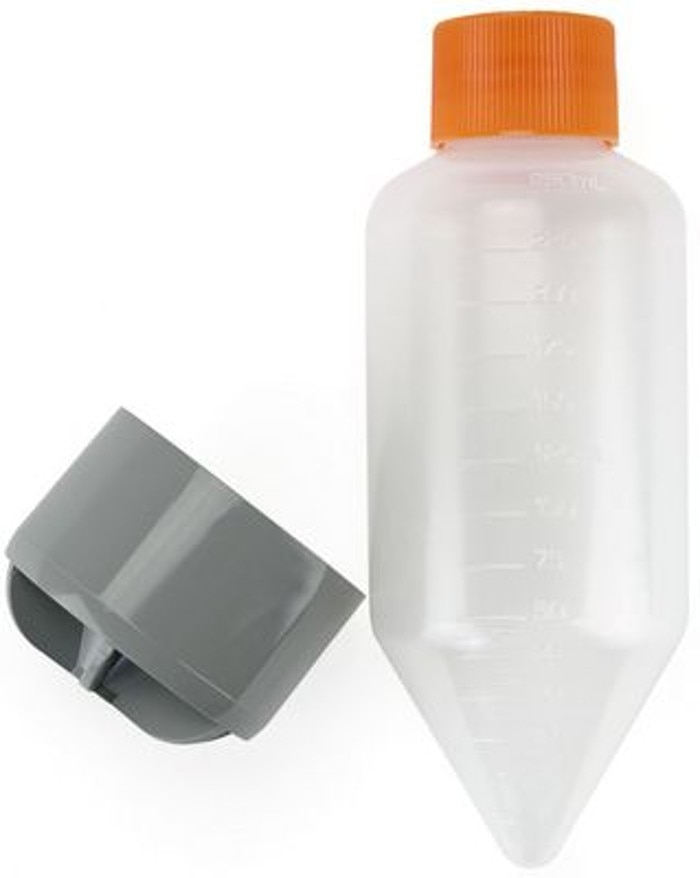
When pelleting cells, especially yeast or mammalian cells in flat-bottom vessels in a higher volume in a swing-out rotor, the pellet is not completely solid (depending on the application, it may not be possible to spin the cells at a higher speed to get a more compact pellet, because mammalian cells in particular are quite sensitive when it comes to centrifugal forces). The fact that the pellet is not completely solid means that when braking forces are too strong, the pellet could be remixed, leading to sample loss when the supernatant is discarded. Therefore, we recommend lowering the deceleration ramp (usually it is not necessary to shut off the brake completely) to keep the pellet from swirling up. The use of a vessel with a conical bottom shape can also help you get a tighter pellet, even when centrifuging at lower speeds.
Thus centrifuges with different acc/dec ramps offer users the option of adjusting acceleration and deceleration and optimizing their protocols quite easily.